In today’s volatile job markets, CFOs and CEOs face a clear reality: just 15% of organizations actively pursue strategic workforce planning, while most still rely on one-year headcount forecasts. Even with workforce planning ranked as a top HR priority for 2025, many organizations remain dependent on reactive external hiring. The result is expensive: replacing a role can cost anywhere from 50% to 200% of annual salary.
This is no longer just an HR efficiency issue—it’s a direct risk to execution and financial performance. Skills data sits in isolated HR systems, performance insights remain disconnected, and business demand is locked in static planning cycles. As priorities shift faster than annual planning processes can accommodate, the gap between workforce capability and execution needs continues to widen.
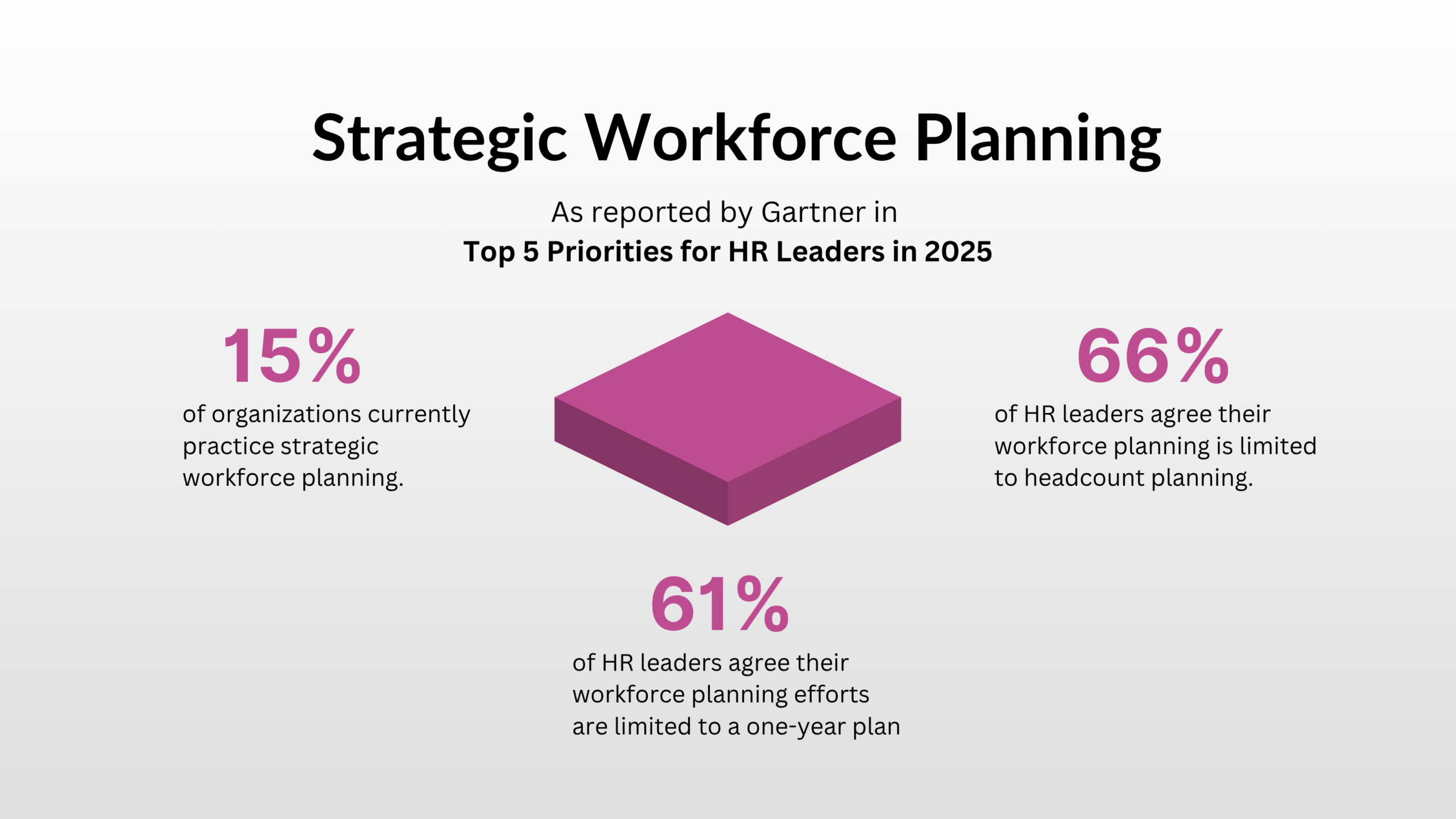
The Cost of Reactive Workforce Planning
When workforce planning is reactive rather than predictive, capability gaps only become visible once they begin to impact execution. Strategic initiatives slow down because critical skills are not available when needed. When that happens, companies default to urgent external hiring. It’s expensive, slows time-to-productivity, and often leads to inconsistent execution. The bigger issue is that internal talent often remains underutilized, simply because no one has a clear view of what people can actually do
McKinsey & Company research shows that companies that dynamically align talent with strategic priorities generate 30% higher revenue growth per compensation dollar compared to peers, highlighting the financial impact of better workforce alignment.
The problem is that most companies only notice misalignment once delivery is already underway. Market leaders are addressing this by shifting toward predictive workforce intelligence—forecasting not just headcount needs, but the capabilities required to execute future strategy.
Skills Library as the Foundation
Traditional skills frameworks quickly lose relevance in fast-changing environments because they rely on static definitions and manual updates. McKinsey reported that only 28% of executives report effective workforce-strategy alignment, creating a persistent lag between actual workforce capability and organizational visibility.
A dynamic skills library addresses this gap by continuously mapping capabilities across roles, projects, and performance signals. Instead of relying on static job architecture, it creates a living view of the workforce—linking skills to business-critical needs and surfacing both current and emerging skills shortfalls.
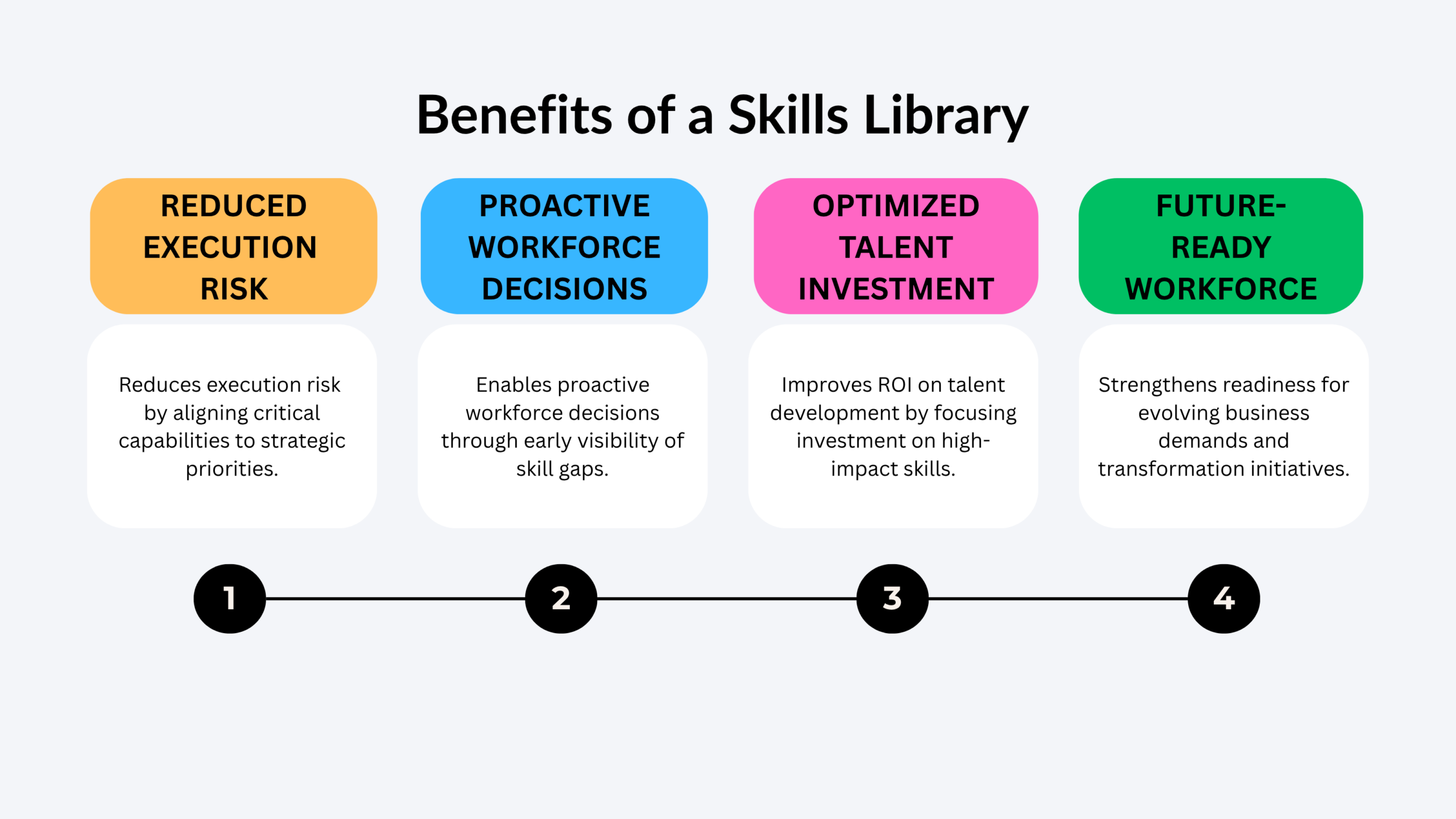
This is not theoretical. Deloitte research shows that organizations using skills-based models are 63% more likely to achieve business results and 79% more likely to deliver a positive workforce experience, demonstrating a clear link between skills visibility and execution performance.
With 73% of business leaders expecting talent shortages, the ability to understand and deploy skills effectively is becoming a critical driver of execution and business resilience. That level of visibility makes internal mobility more effective. People move more intentionally—and career paths start to make sense.
Internal Mobility & Career Pathing as a Strategic Lever
Internal mobility has the most impact when it is tied to clear career paths. Together, they don’t just move people around the business but also help build the skills needed for what’s coming next.
Every move inside the organization, whether it’s a promotion, a lateral move, or a project role, shows how skills are being used and developed. Over time, this creates a clearer picture of who is growing into which types of roles, where people are progressing quickly, and where talent mismatches are starting to appear.
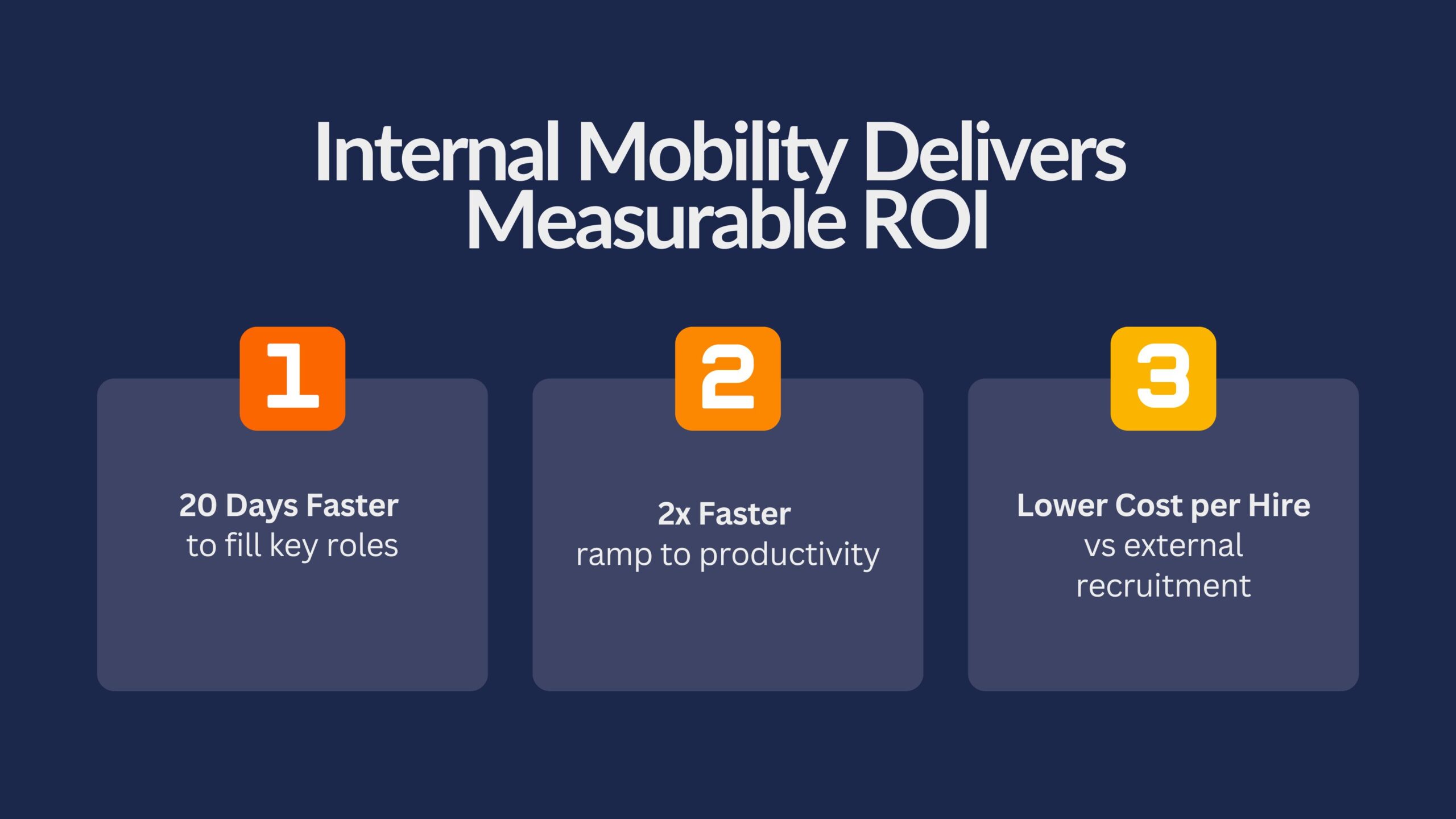
By connecting mobility patterns with career pathways, organizations can deploy talent more precisely, shorten time-to-productivity for critical roles, and improve overall workforce utilization. Organizations leading in internal mobility see 79% more leadership promotions, 53% longer employee tenure, and 17% higher learning engagement, strengthening leadership pipelines, retention, and workforce capability.
AI as the Enabler of Skills Planning
Skills-based planning and internal mobility only really work when organizations can see what’s happening in real time. Without that, planning quickly becomes outdated and reactive. AI helps close that gap by giving leaders a clearer, up-to-date view of skills across the business and where demand is starting to shift. Instead of relying on fixed plans, companies can respond earlier—whether that means developing people or moving talent into new roles.
Top-performing enterprises are already executing on this. Unilever, for example, uses an internal talent marketplace to improve skills visibility and move people across the business more quickly, reducing reliance on external hiring. IBM has invested heavily in AI-driven skills taxonomies and talent matching, using Talent Frameworks data to identify critical skill gaps and connect employees to roles, projects, and development opportunities based on capabilities rather than job titles.
Deloitte has found that organizations using skills-based approaches alongside advanced analytics are more likely to achieve stronger business outcomes and improve productivity. McKinsey & Company also notes that better alignment between talent and work leads to higher returns on workforce investment.
Turning Workforce Planning into a Strategic Advantage with CXS Analytics
The organizations that outperform today aren’t the ones that react fastest to workforce gaps, but the ones that anticipate them early. As skill needs change faster than traditional planning cycles, static forecasts often lead to delays, higher hiring costs, and last-minute decisions.
By combining skills visibility, internal mobility, and AI-driven insights, companies can better understand current capabilities, future needs, and emerging gaps—making it easier to decide when to build, move, or hire talent.
With this visibility, workforce planning becomes more proactive and aligned with both day-to-day execution and long-term goals. CXS Analytics helps organizations map skills, identify gaps, and align talent decisions with real business needs.
Stop fixing gaps too late. Make better talent decisions earlier. Contact CXS Analytics to assess your talent pipeline today.