
The Talent Investment Strategy: Why Internal Growth Outperforms External Hiring
Replacing an employee can cost up to twice their annual salary. But the bigger cost is often hidden. Disengaged employees who stay, can underperform and quietly drain productivity and revenue. According to McKinsey, about 20% of employees report being unhappy with their employer, even if they stay for job security or work–life balance. Gallup also reports that only one in five employees feels fully engaged.
Disengagement is a direct hit to business productivity, revenue, and stability. It’s a talent economics problem that can raise retention costs, lower productivity, and threaten long-term stability. When employees can’t see a clear path for growth, many start looking elsewhere. Addressing employee experience is not optional; it’s a way to protect your people and your bottom line.
The Cost of Siloed Talent Systems
External hires come at an 18–20% cost premium over internal promotions. Yet many organizations still rely on them as a default solution—despite the higher cost and slower return on productivity. In many cases, employees leave because they cannot see clear career paths. Training, promotions, and succession planning often operate in separate silos. When people can’t figure out what’s next for their current roles, they start exploring opportunities elsewhere.
Bringing in new hires might seem faster, but it comes with trade-offs. It can take two to five months for them to reach full productivity, and some never hit their expected performance, or worse, leave before making an impact. Over time, this becomes a costly pattern.
Investing in internal talent pipelines works differently. Roles are filled faster, and knowledge stays within the business. It also signals that growth is possible. In 2013, after an extended search, Satya Nadella, a long-time insider, stepped into the CEO role at Microsoft. The market responded immediately, with the company’s stock rising by around 30%, adding tens of billions in value. It reinforced a clear point: strong internal pipelines support stability during critical transitions.
Expanding Roles and Responsibilities
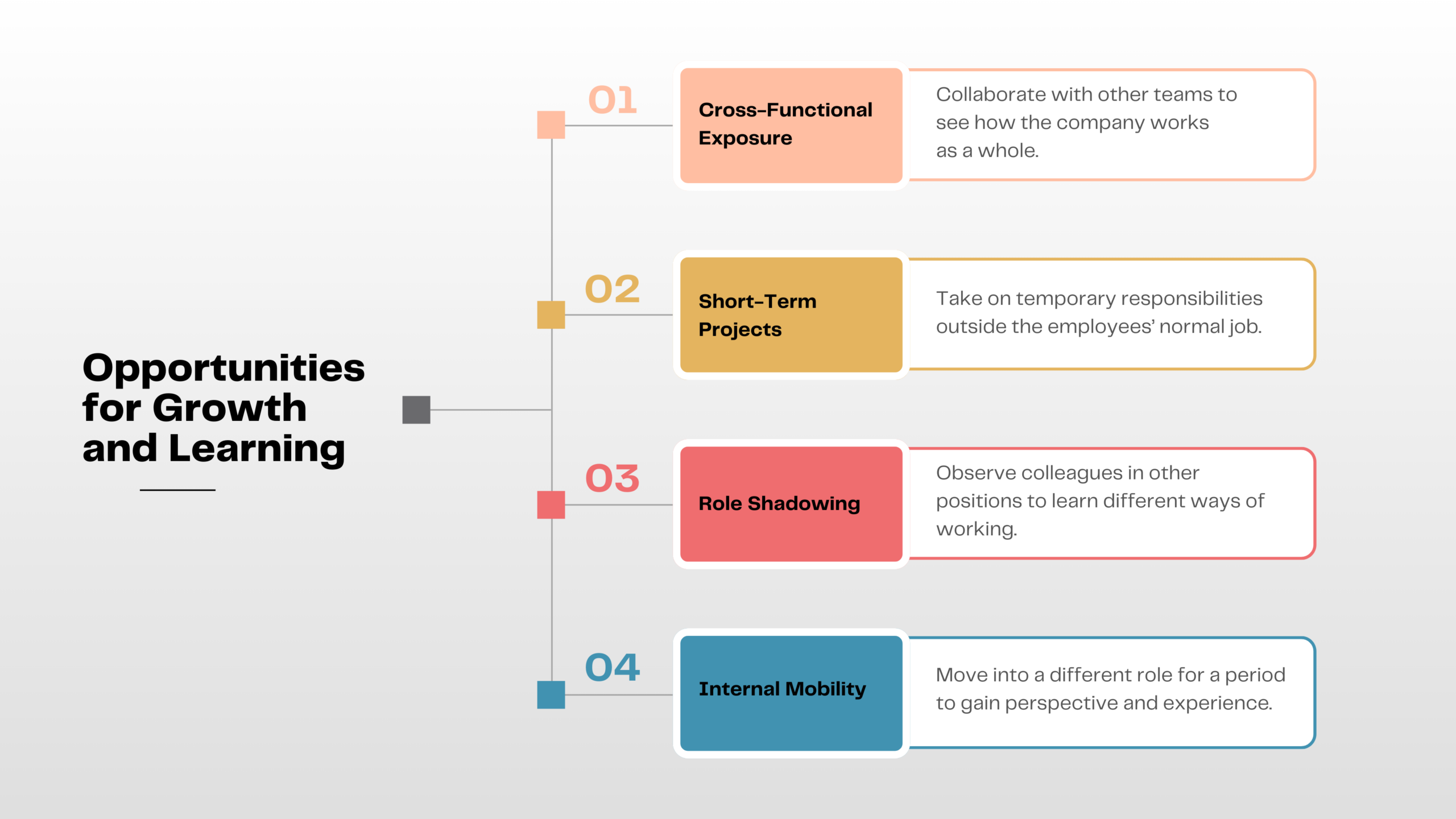
Promotions aren’t the only way employees grow. People learn a lot when they try new things, such as working on different teams, taking short-term projects, shadowing colleagues, or moving into temporary roles. That matters because it lets the company make the most of existing talent instead of always paying a premium for external hires.
This isn’t just about employee growth as it’s also about how organizations stay agile as up to 40% of core job skills become obsolete by 2030. Zhang, Tang, and Lyu found that job rotation increases employees’ sense of accomplishment while reducing emotional fatigue. Organizations build broader capability and reduce dependence on external hiring when employees take on varied responsibilities. These responsibilities include cross-functional assignments, short-term projects, role shadowing, or internal mobility. This approach not only develops talent but also allows the organization to address skill gaps without relying solely on external hires.
Of course, not every development opportunity delivers results. Assignments need to align with employees’ skills and interests. Assigning work without a clear plan can overwhelm people and limit the impact. When approached carefully, expanding roles strengthens organizational agility, spreads knowledge, and allows the company to address skill gaps without constantly turning to external hires.
Learning as an Investment
For every dollar invested in learning and development (L&D), companies can see roughly $4.70 in additional revenue. Even relatively small increases in L&D spending, such as an additional 1% of payroll, have been linked to about a 0.2% rise in revenue. These figures highlight an important point for business leaders: workforce development is not simply a training expense but a strategic investment in long-term performance.
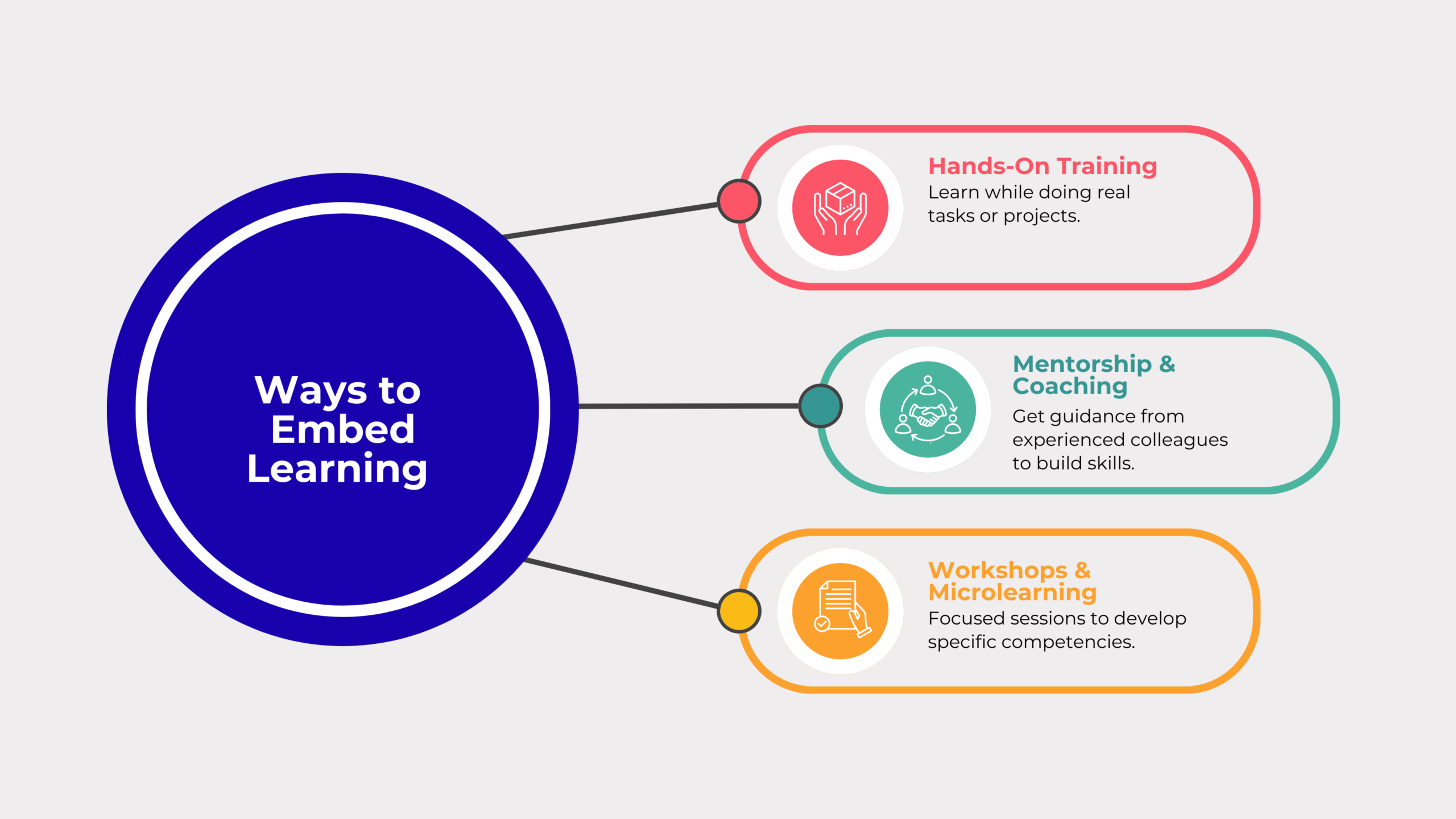
Embedding learning into day-to-day work accelerates skill development while maintaining productivity, allowing organizations to build capability without taking employees away from their roles.Instead of relying only on formal training courses, employees often grow more through real experience—taking on projects, stepping into stretch roles, learning from colleagues, or picking up short-term responsibilities.
Companies that do this well tend to keep their people longer too. When employees feel like they’re growing, they’re far more likely to stay and build their careers internally. Organizations that cultivate strong learning cultures also tend to retain talent more effectively, with retention reported to be up to 57% higher in some cases.
Strengthen Your Workforce with CXS Analytics
Talent isn’t just about hiring. It’s about helping your people grow. When employees can’t see the next step in their career, they quietly check out, slow down on key projects, or look elsewhere for opportunities. Investing in internal mobility, hands-on learning, and transparent skill visibility gives people the clarity and opportunities they need to stay motivated while helping teams adapt to changing business priorities. The result is a workforce that retains its top talent, moves more agilely, and is better aligned with its strategic business goals.
CXS Analytics gives leaders the insights to align talent with business priorities, retain expertise, and build agile teams. Contact us to learn how to strengthen your workforce strategy and make the most of your internal talent.