
Redefining Talent Acquisition: The Impact of Psychometric Tools
The job market today looks very different than in the past. With the rise of AI and digital tools, new roles are emerging, and younger generations are entering the workforce; this has made recruitment trickier than before. In order to stay competitive, employers need to rethink their talent strategies. The goal is to send out a job offer with confidence that the candidate you chose not only does the job well but also can grow, fit the team, and stay for the long term. This is where psychometric tools come in handy. In this blog, we will discuss what these tools are and how they can support a seamless hiring process.
What are Psychometric Tools?
Psychometric tools are structured assessments that measure psychological traits. There are various types of psychometric assessments, including personality and behavior, work interests, aptitude abilities, and many more.
Do These Tools Matter?
When companies want to hire new employees, the steps are pretty much the same: they screen the resumes, conduct interviews and skills-based tests, and check references. While these steps are important, they don’t always tell you the full picture. Psychometric tools can fill in those gaps. A survey done by the Malaysian Employers Federation (MEF) in 2019 found that 67% of Malaysian companies use psychometric assessments in their talent acquisition strategy.
According to Wayne, in research conducted in 2010, many companies use special tests when hiring new people. These tests look at things like skills, personality, motivation, and how well someone might do the job.
Unilever is a good example of successfully using these tools. When recruiting candidates, they use game-based assessments to test their aptitude, logic, reasoning, and risk avoidance characteristics. This game will determine whether they make choices that will reflect their characteristics, whether favorable or unfavorable to the hiring team. This has helped them reduce hiring times and retain more employees.
- Hiring Better Candidates
Psychometric tools give you a clearer picture of how someone thinks, how they get along with others, and what their aptitude abilities are. When you use models like RIASEC or OCEAN, you can build teams that work well together and get the job done. - Helping Employees Grow and Stay
Psychometric tools can show you what the employees are good at and where they might need support. That way, you’re not just playing the guessing game of what might or might not work. You can shape a plan that perfectly fits them. When employees feel supported, they’re much more likely to stick around for the long haul; making your talent acquisition process more effective. - Strategic Workforce Planning
Psychometric assessments also give employers a clearer picture of where the team stands now and in the future. They help spot skill gaps and figure out who might be ready to take on leadership roles. This makes sure the company is equipped with extensive succession planning and ready for challenges or opportunities that lie ahead.
Types of Psychometric Tools You Should Know About
There are lots of psychometric tests out there, but some get used more often because they help you learn important things about a person.
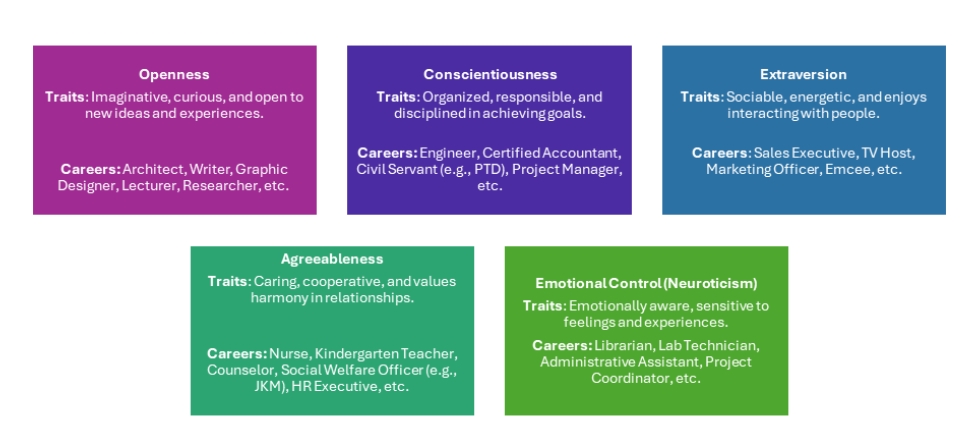
OCEAN
The OCEAN model was made by two psychologists, Robert McCrae and Paul Costa. It looks at five key traits:
- Openness
- Conscientiousness
- Extraversion
- Agreeableness
- Neuroticism (also known as Emotional Stability).
When you are familiar with these traits, you can figure out things like if the candidates adapt to changes easily, if they remain calm under pressure, how they mix with others, and many more.
RIASEC
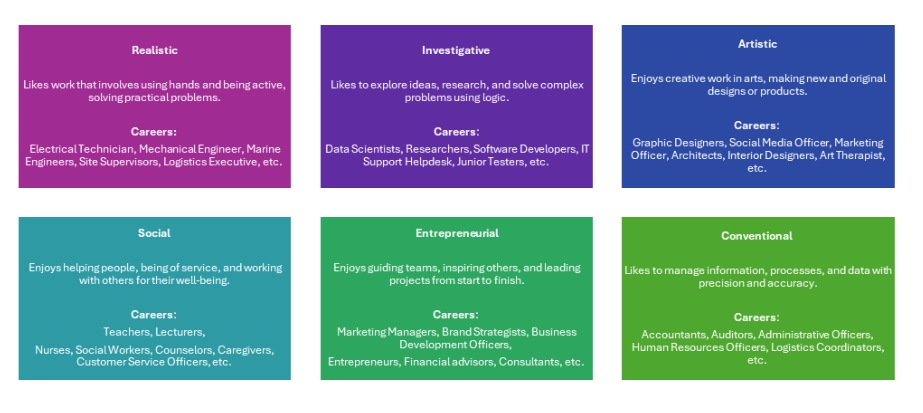
RIASEC is a personality model that was created to help individuals find their best-suited careers. It was created by psychologist John Holland, grouping people into six types:
- Realistic
- Investigative
- Artistic
- Social
- Entrepreneurial
- Conventional
Having the skills for a job isn’t always enough if you don’t enjoy what you’re doing; it can be tough. RIASEC is helpful in figuring out which kind of jobs or work setups fit someone best. For example, candidates who love working in a laid-back, creative space might find a strict, very organized job frustrating. They could be great at writing but might not perform as enforcement officers. Here’s a quick look at the six types:
Cognitive Assessments
Cognitive assessments give insight into how candidates think, especially when faced with new or challenging situations. These tests typically measure things like math ability, logical reasoning, and spatial awareness. In a study conducted by Schmidt and Hunter, they concluded that cognitive ability tests are one of the best predictors of job performance.
How to Integrate Psychometric Tools in Hiring Processes
If you want to start integrating psychometric tools in hiring processes, keep these steps in mind:
- Have Clear Job Roles
Before choosing any type of tools, make sure you have clearly defined what it looks like for a candidate to excel in the role. What competencies, personality, and behaviors do they need to have? This helps you pick the right tools that match the job’s requirements. - Train Your Hiring Team
To use psychometric tools effectively, you have to ensure that your hiring team knows how to use them well. These tools are only effective if your team knows how to operate them. That’s why it’s important to provide training so hiring teams can easily interpret the results, understand what they mean, and apply that data in hiring and future planning. - Incorporate Other Hiring Methods
Psychometric assessments can add a lot of value to your talent strategy, but they do not work on their own. You have to combine them with other hiring methods, like structured interviews or skills-based assessments, to get a view of the candidates’ skills and competencies.
Monitor What Works—and Doesn’t
Once you have started using these assessments, track how well they’re working in your hiring processes and identify which area requires improvement. Do the tools aid in reducing turnover and increasing retention?
Hire Smarter with CXS
Effective hiring goes beyond evaluating qualifications and experience. It’s also about understanding the whole person behind their CVs. Psychometric tools offer valuable insights into a candidate’s personality, cognitive abilities, and fit within your organization. If you’re looking for ways to include psychometric tools into your hiring strategy and don’t know where to go, CXS has got you covered! Contact us now and find out how you can build stronger and more engaged teams today.